The Architect
Richard Morrow Hunter (1933–2023) was born and raised in Phoenix, Arizona. He studied architecture at the University of Colorado and the University of Oklahoma, graduating in 1958.
Hunter practiced first in California and Alaska before settling in Victoria, British Columbia in 1968. His body of work—largely residences along the Pacific coast—was rooted in the American organic tradition, carrying forward the influences of Frank Lloyd Wright, Bruce Goff, and the drawings of Eric Mendelsohn.
He married Frances Mead in Kyoto in 1963. His practice produced houses and gardens across Victoria, Alaska, California, New Mexico and Japan, including the Cook, Denux, Haines, Killam, Martin, Pumple, Rankin, Rose and Sievert residences, the Mt. Baldy Zen Centre in California, and the Torii house and garden in Kyoto.
Biography drawn from the Richard Hunter fonds, Canadian Architectural Archives, University of Calgary.
The House
Hunter began work on his own residence in 1970 and continued refining it for more than fifty years, until his death in January 2023.
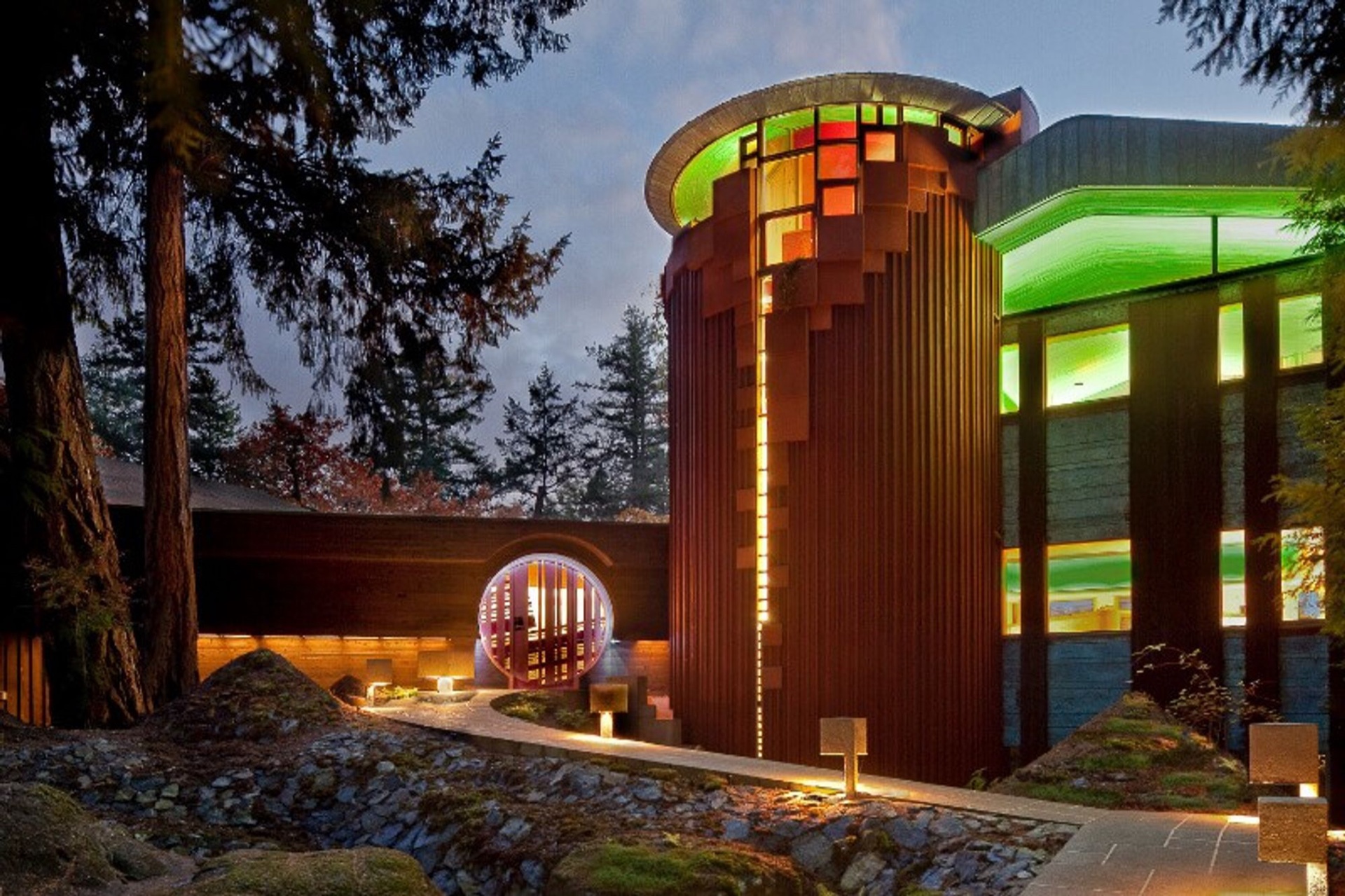
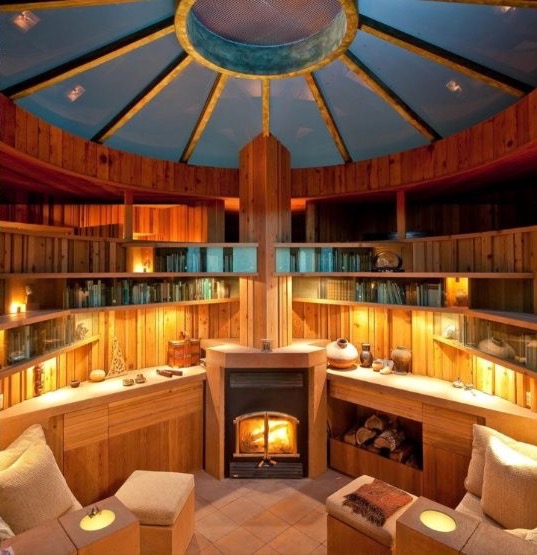
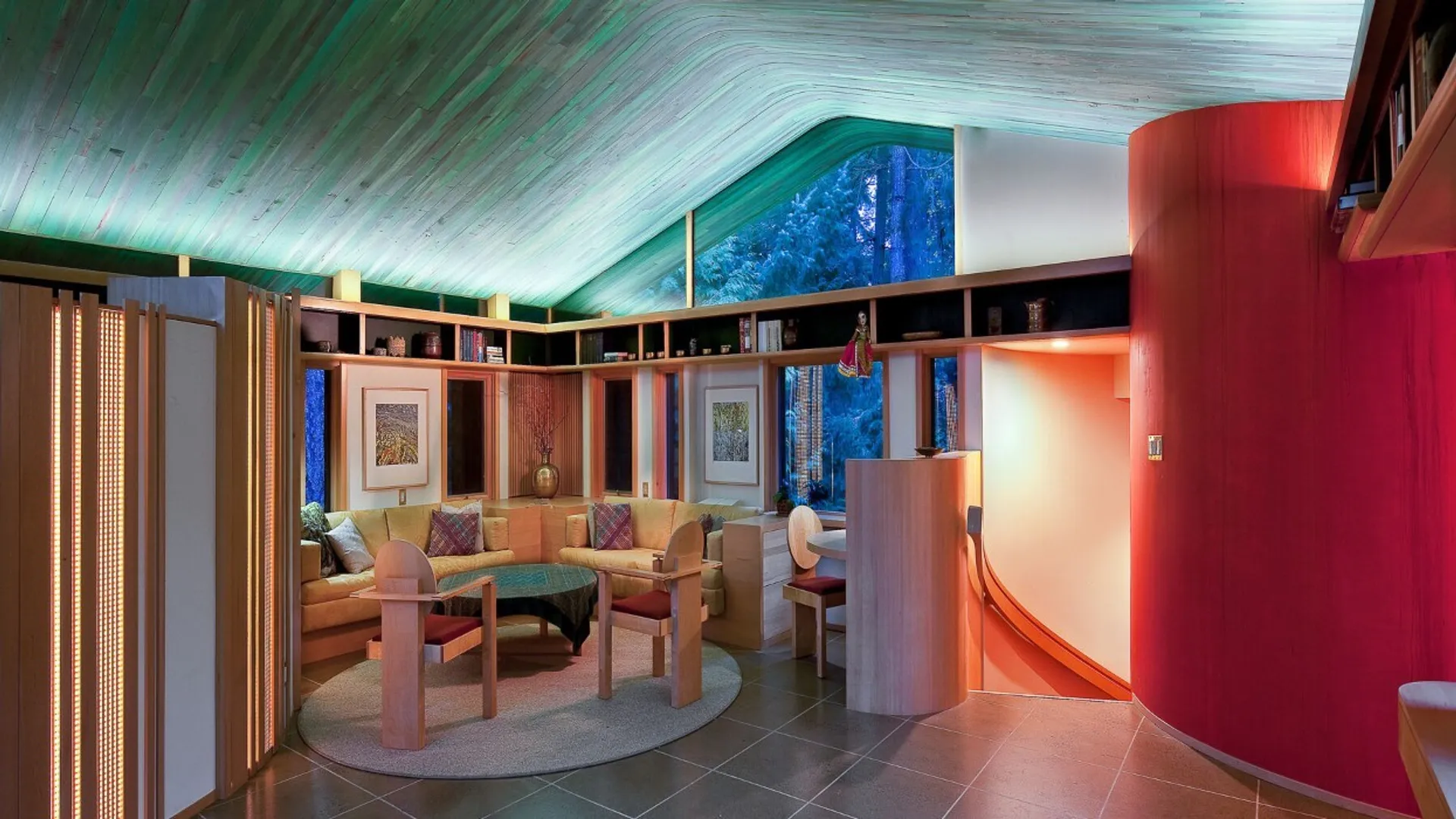
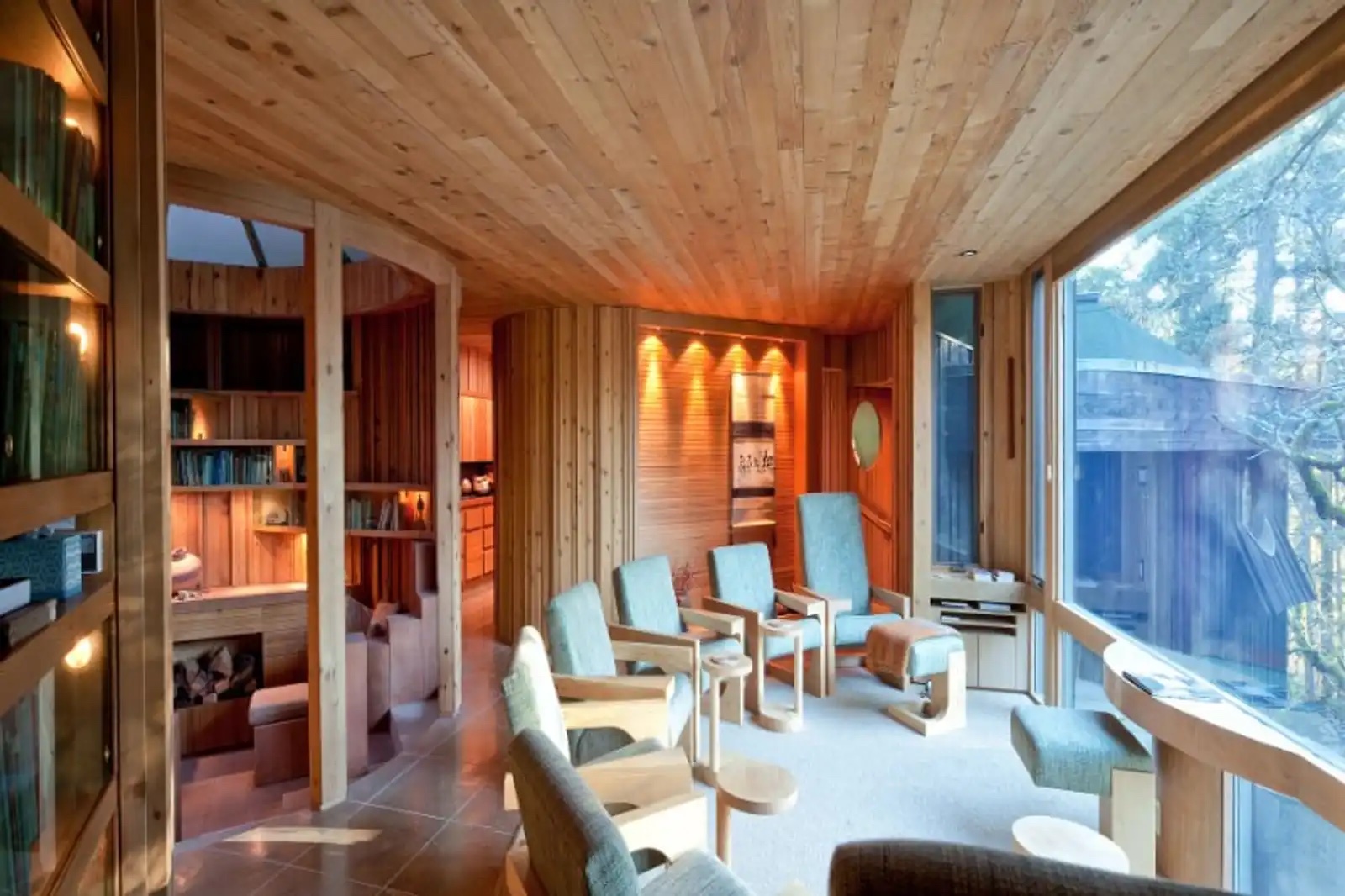
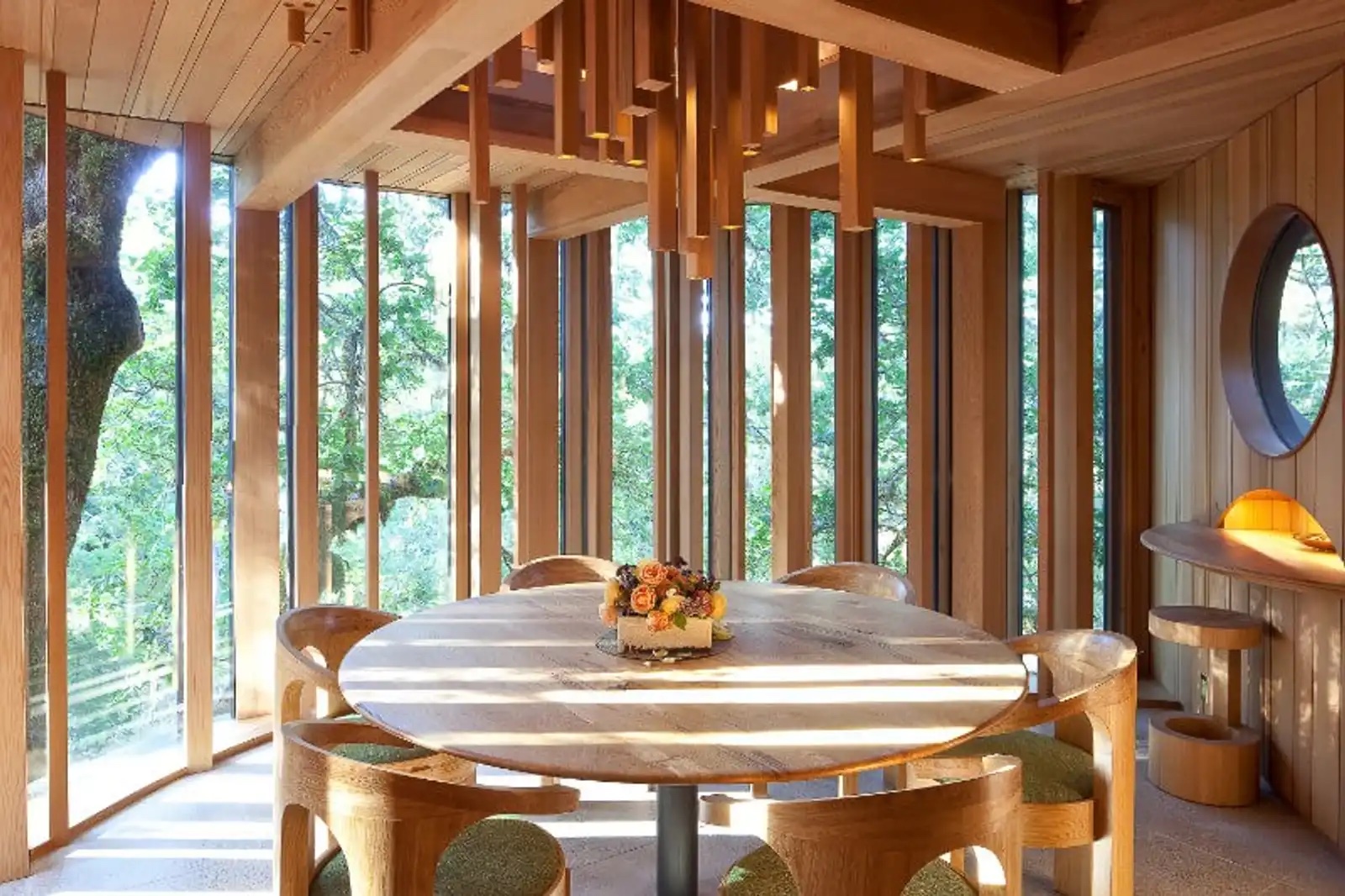
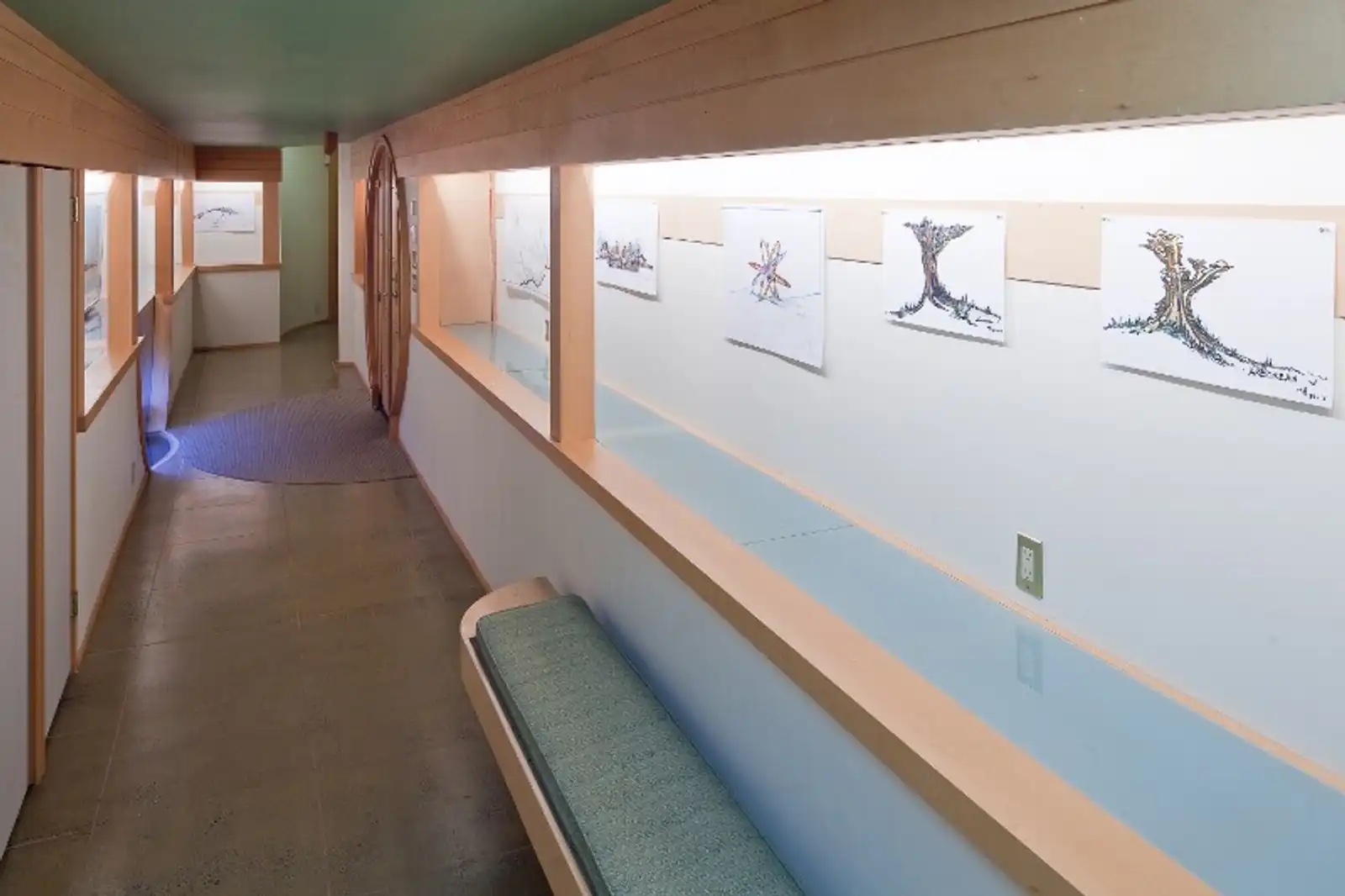
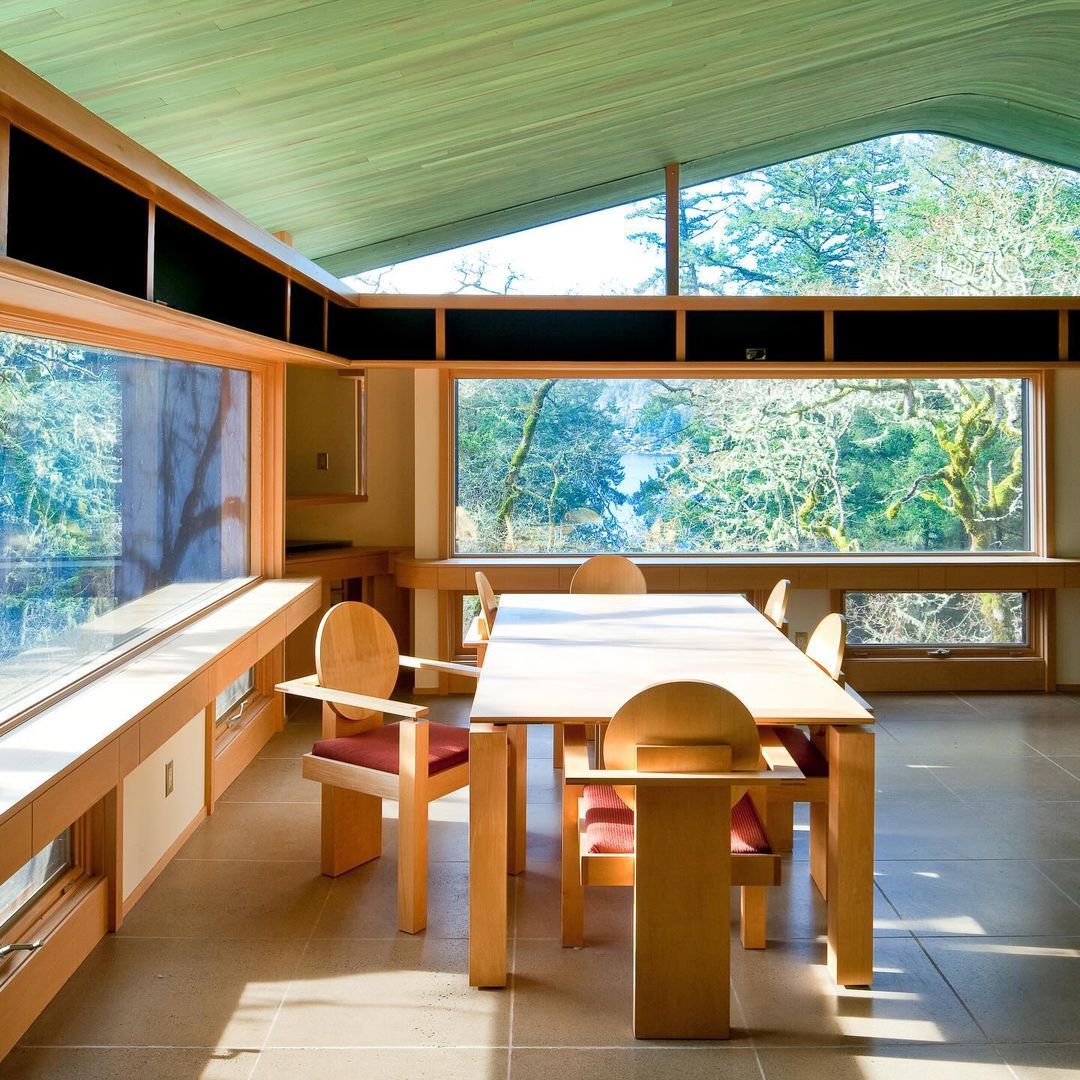
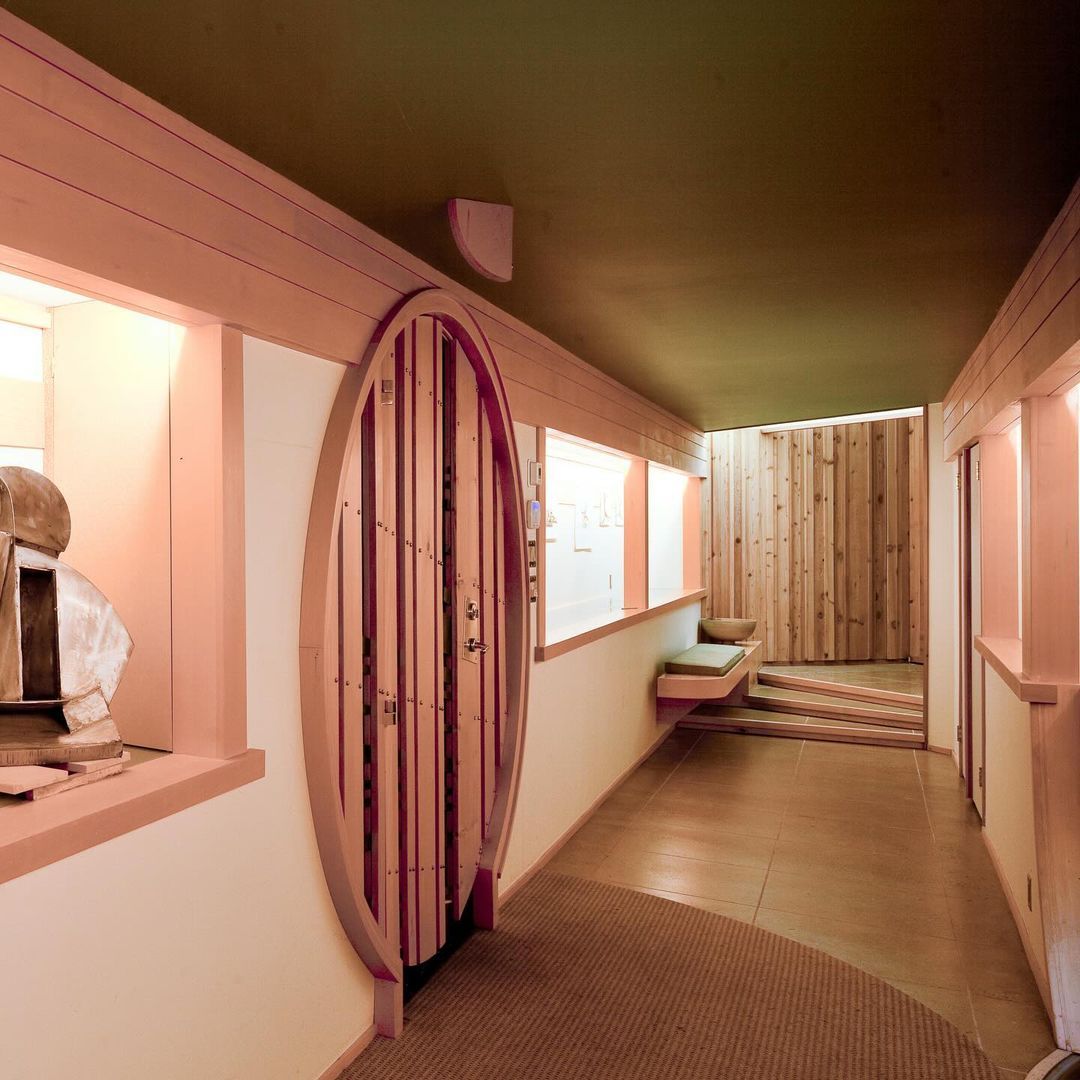
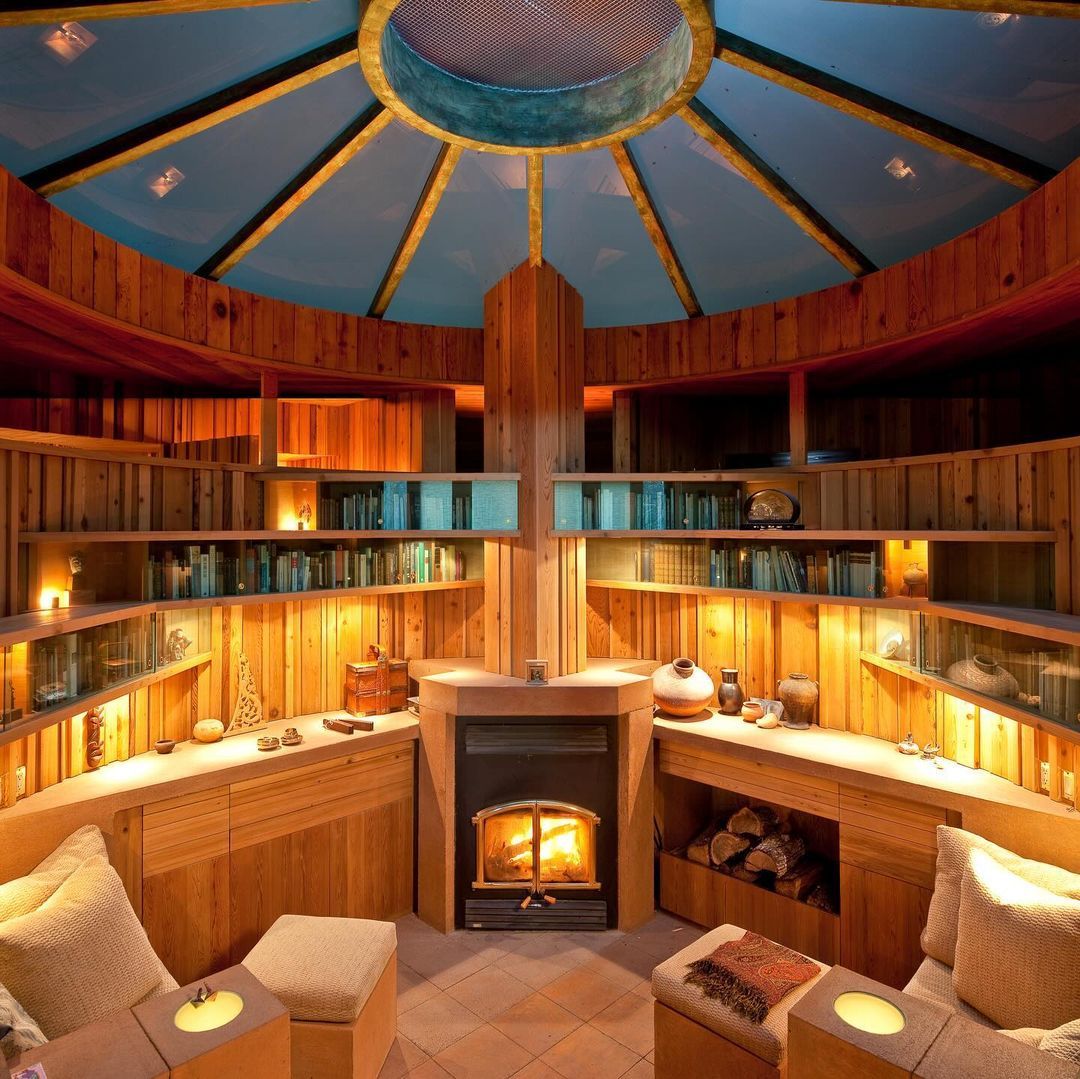
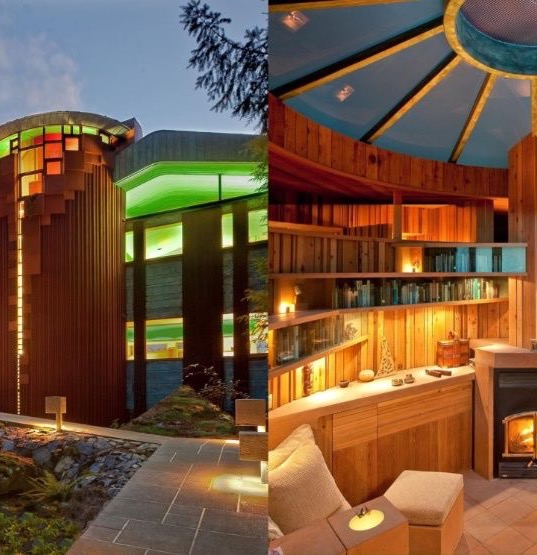
Completed in 1974, the house is a sustained study in west-coast modernism: timber frame, walls of glass, skylights and hand-placed mirrors that pull daylight deep into the plan. A central hearth anchors the main floor; a circular library sits beside the living room like the crown of a lighthouse, and a dining sphere faces the forest through floor-to-ceiling windows.
The plan unfolds across multiple levels—4,556 square feet of living space, with studio, primary suite, family suite, second kitchen, and a treetop bedroom reached by a winding staircase.
- Completed1974
- DesignerRichard Hunter
- StyleWest Coast Modern
- Area4,556 sq ft
- Site5.02 acres, Prospect Lake
The Land
Five wild acres at the quiet end of Goward Road, lakeside on Prospect Lake.
Hunter chose a sloping, wooded parcel with a natural southern exposure and a walk-on waterfront dock. Mossy meadows, Garry oak, Douglas fir and arbutus surround the house; trails drop down to the lake. The home does not sit on the land so much as in it—catwalk pathways, elevated decks, and windows that read the forest as room dividers.
The result is the quality that brought visitors to the 2024 listing back to the same phrase: treehouse.
Legacy
A house built slowly, by one hand, over half a century.
Hunter’s drawings, photographs and project records are preserved at the Canadian Architectural Archives, University of Calgary. The Hunter Residence remains his longest single project and, among those still standing, his most personal—a living record of a pacific-coast practice that drew threads from Phoenix, from Oklahoma, from Kyoto, and wove them into the mossy forest west of Victoria.
The Hunter House Foundation exists to steward the house Richard Hunter left behind and to share his work with the public who cared for it before we did.